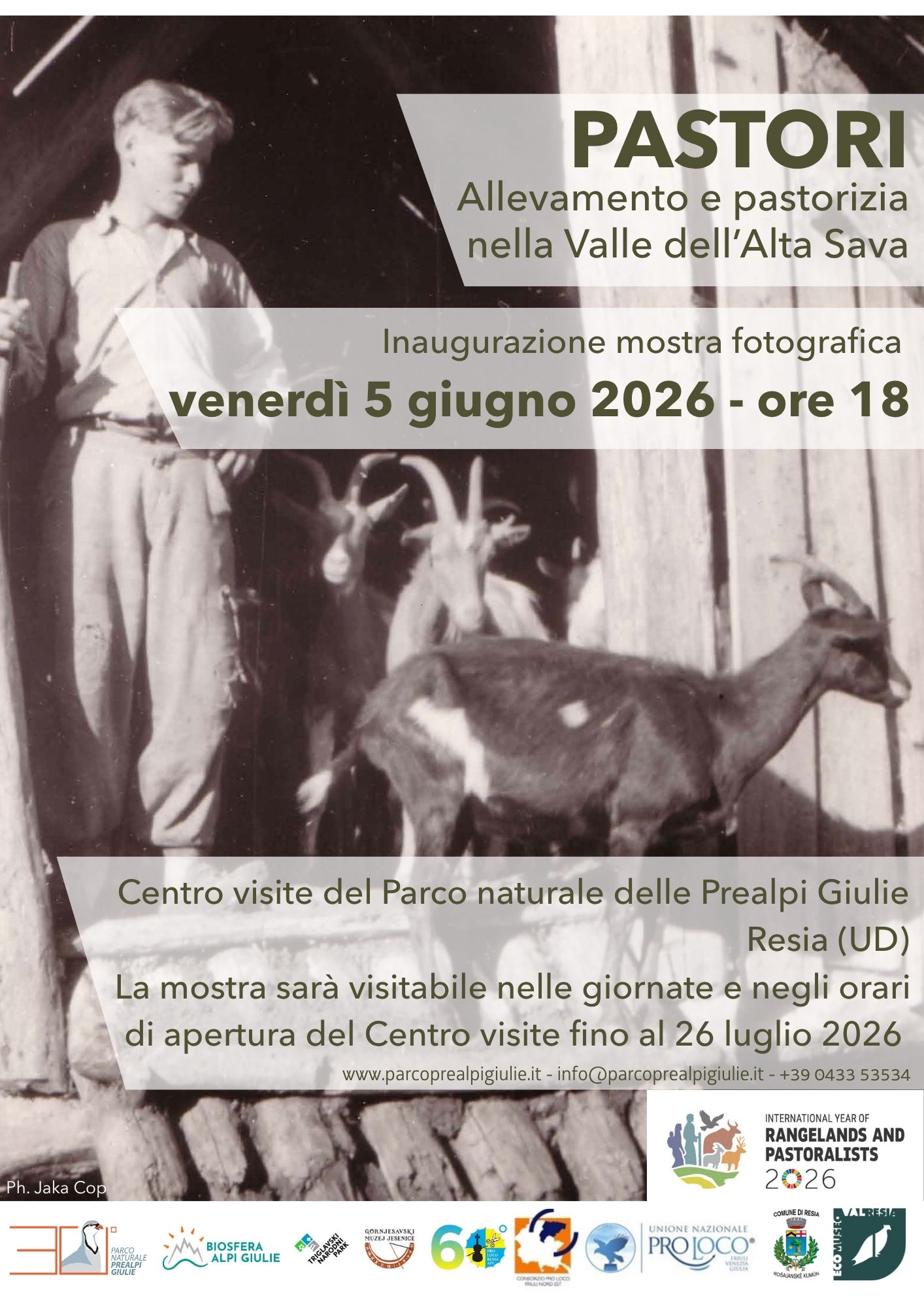
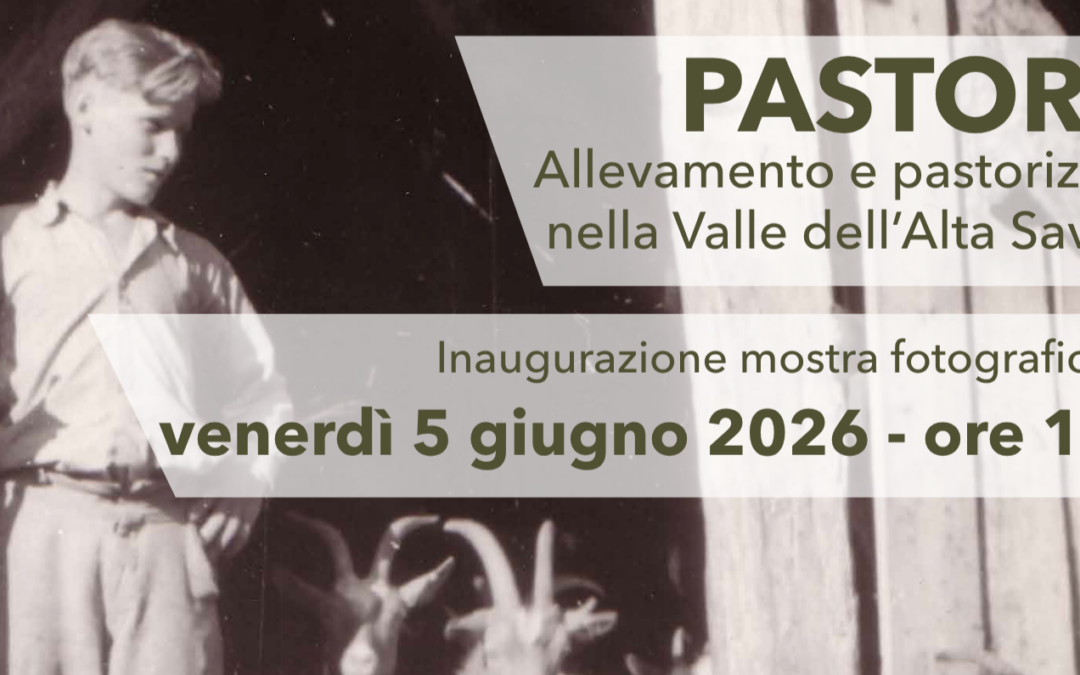
The Julian Prealps Nature Park will host the photographic and documentary exhibition “SHEPHERDS: Livestock Farming and Shepherding in the Upper Sava Valley” at the Resia Visitor Center, an exhibition dedicated to the culture of mountain pastures and the pastoral traditions of the Slovenian Julian Alps.
The opening will take place on Friday, June 5, 2026, at 6:00 p.m. at the Park’s Visitor Center in Resia.
The exhibition, curated by Špela Smolej Milat and organized by the Slovenian “Gornjesavski muzej Jesenice,” explores the lives of shepherds, the organization of mountain pastures, dairy production, and the historical relationship between Alpine communities and the mountain landscape of the Upper Sava Valley. Through historical photographs, documents, and ethnographic accounts, the exhibition offers an authentic glimpse into the pastoral reality of the Slovenian Julian Alps, a shared cultural heritage of the cross-border communities.
The event is part of the established cross-border collaboration between the Julian Prealps Nature Park and the Slovenian Triglav National Park, developed over the years through numerous joint projects dedicated to the protection and enhancement of the Alpine natural and cultural heritage, including within the framework of the European Charter for Sustainable Tourism (ECST).
The exhibition also represents an important opportunity to highlight the Julian Alps Transboundary Biosphere Reserve, recognized by UNESCO’s Man and the Biosphere Program as a unified territory where the environment, traditions, landscape, and cultural identities constitute a shared heritage that transcends national borders.
The initiative takes on even greater significance as 2026 marks the International Year of Pastures and Shepherds, promoted by the United Nations and dedicated to recognizing the fundamental role of extensive pastoralism in protecting biodiversity, preserving cultural landscapes, and safeguarding the traditions of mountain communities.
The culture of alpine pastures and pastoralism has shaped the landscape of the Julian Alps for centuries, contributing to the conservation of biodiversity and keeping alive traditions, knowledge, and community ties that remain a fundamental element of the identity of the Alpine valleys to this day.
The exhibition will be open during the Visitor Center’s regular hours until July 26, 2026.